

 By
By The report highlights shifting priorities among young professionals, including demand for transparent pay, faster growth opportunities, and flexible work models, and examines internship trends and early-career attrition.
- Only 36% of HR leaders feel fully prepared to hire and manage Gen Z talent, revealing a growing readiness gap
- Nearly 27% of candidates drop out of hiring processes due to a lack of pay transparency
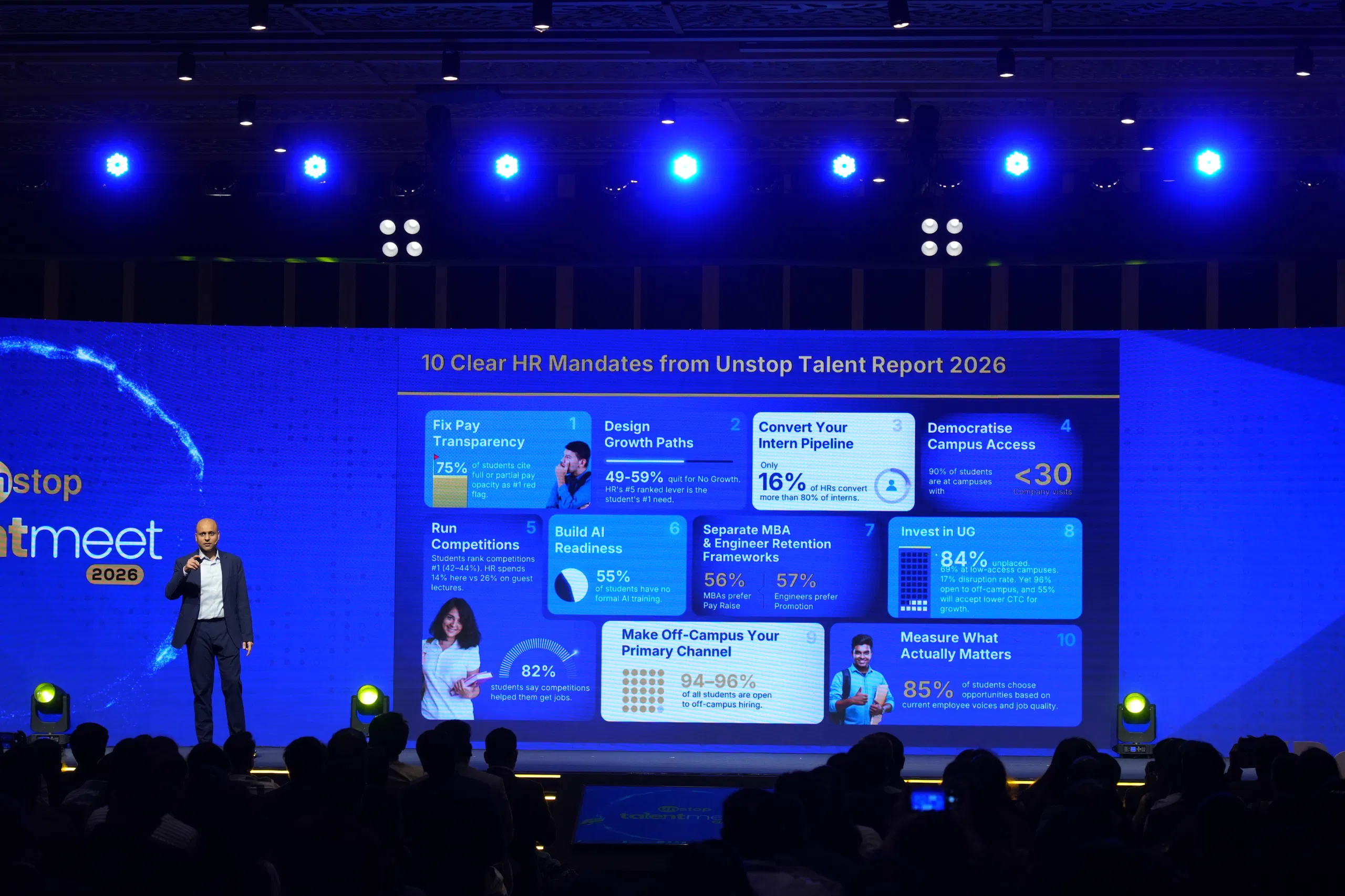
- 78% of organisations run internship programmes, but only 16% convert over 80% of interns into full-time hires
- 95% of students are open to off-campus opportunities, signalling a shift beyond traditional campus placements
- 90%+ Gen Z professionals are willing to accept slightly lower compensation if roles offer stronger learning opportunities, faster career progression
India, 18 March, 2026: Unstop, a leading platform connecting students and early professionals with career opportunities, has released its latest Unstop Talent Report 2026, “Era of Human + AI: Decoding India’s Talent Landscape.” The report presents insights from surveys of 37,000+ students and 500+ HR leaders, offering a comprehensive view of how Gen Z professionals are reshaping career expectations, internship pathways, and workplace priorities. The report highlights a growing disconnect between what Gen Z expects from employers and how prepared organisations are to meet those expectations, particularly around compensation transparency, career growth visibility, and flexible work environments.
Notably, the report finds that only 36% of HR leaders feel fully prepared to hire and manage Gen Z talent, underscoring a widening readiness gap between organisations and the expectations of the emerging workforce.
Transparent Pay and Career Growth Are Top Priorities for Gen Z
The report reveals that transparent compensation and clear growth pathways are among the most critical expectations for Gen Z candidates. Nearly 36% of HR leaders identify transparent pay from day one as a key requirement, while 26–27% of students cite compensation opacity as the biggest red flag when evaluating employers.
In fact, nearly 27% of candidates drop out of hiring processes due to lack of salary transparency, highlighting how pay opacity directly impacts employer attractiveness.
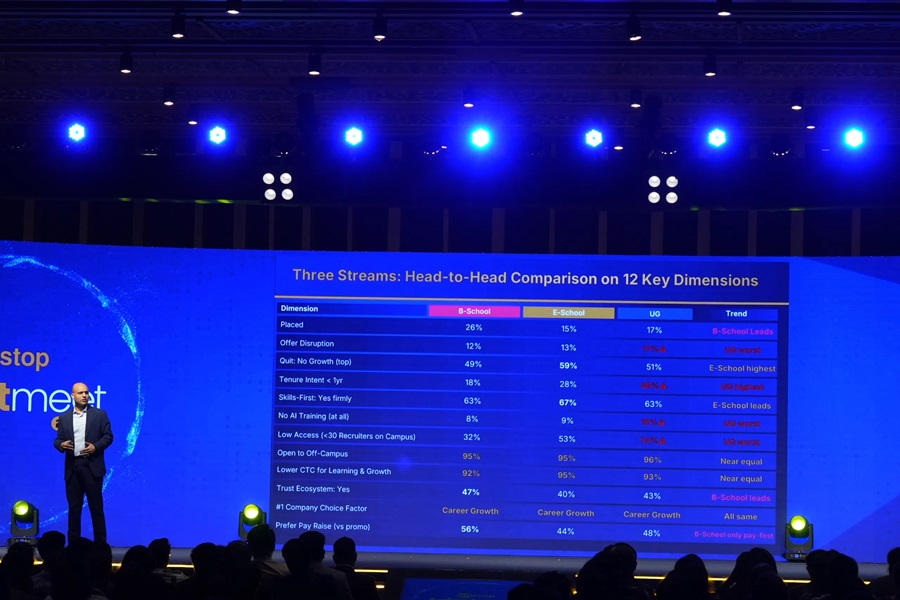
At the same time, career growth visibility plays a decisive role in retention. The report finds that 49–59% of early career employees leave organisations due to lack of growth opportunities, highlighting the importance of structured career pathways for young professionals.
The report also highlights that 90%+ Gen Z professionals are willing to accept slightly lower compensation if roles offer stronger learning opportunities, faster career progression, and better work–life balance.
Flexible Work Models Becoming the New Normal
Gen Z professionals are also redefining expectations around work models. According to the report, only 28–29% of students across streams prefer a fully in-office work model, signalling a strong preference for hybrid or flexible working environments.
This shift indicates that organisations must rethink workplace policies to remain competitive in attracting early talent, especially as flexibility increasingly becomes a deciding factor in job selection.
Learning and Skill Development Trump Brand and Salary
Contrary to traditional assumptions, the report shows that learning opportunities and skill development matter more to many Gen Z professionals than salary. Nearly 60–65% of respondents cited learning opportunities as their primary motivator in their first job, surpassing compensation or employer brand.
While learning and growth dominate Gen Z priorities, factors such as salary (11–13%), employer brand (as low as 2–10%), and stability (5–11%) rank significantly lower, indicating a strong shift toward skills-first career thinking among young professionals.
This trend reflects a shift toward skills-first career thinking, where young professionals prioritise roles that accelerate their professional development and provide real-world exposure. The report further highlights that current employees, college alumni, and seniors are the most trusted sources when students evaluate potential employers, often carrying greater influence than corporate branding or official recruitment messaging.
Preferred Workplaces for Gen Z Freshers
The report also highlights evolving workplace preferences among young professionals entering the workforce. Freshers show a strong inclination toward organisations that offer meaningful work exposure, faster learning opportunities, and dynamic environments.
While established corporations and multinational companies continue to attract talent, many Gen Z candidates are equally open to working with startups and emerging companies that promise hands-on experience, faster career growth, and greater responsibility early in their careers.
Unstop Dream Companies 2026 – B School
| Rank 1 | |
| Rank 2 | Microsoft |
| Rank 3 | Amazon |
| Rank 4 | McKinsey and Company |
| Rank 5 | Hindustan Unilever Ltd. |
| Rank 6 | Boston Consulting Group |
| Rank 7 | Bain & Company |
| Rank 8 | Deloitte |
| Rank 9 | Tata Group |
| Rank 10 | Goldman Sachs |
Unstop Dream Companies 2026 – E School
| Rank 1 | |
| Rank 2 | Microsoft |
| Rank 3 | Amazon |
| Rank 4 | Tata Consultancy Services |
| Rank 5 | Infosys |
| Rank 6 | Deloitte |
| Rank 7 | Accenture |
| Rank 8 | Flipkart |
| Rank 9 | Nvidia |
| Rank 10 | Apple Inc. |
Unstop Desirable Companies in BFSI Sector 2026:
| Rank 1 | Goldman Sachs |
| Rank 2 | JPMorgan Chase & Co. |
| Rank 3 | Morgan Stanley |
| Rank 4 | HDFC Bank |
| Rank 5 | Axis Bank |
| Rank 6 | ICICI Bank |
| Rank 7 | HSBC Bank |
| Rank 8 | State Bank of India |
| Rank 9 | American Express |
| Rank 10 | Citi Bank |
Unstop Desirable Consulting Companies 2026
| Rank 1 | McKinsey and Company |
| Rank 2 | Bain & Company |
| Rank 3 | Boston Consulting Group |
| Rank 4 | Accenture Strategy |
| Rank 5 | Deloitte |
| Rank 6 | PwC Consulting Solutions |
| Rank 7 | Ernst and Young LLP |
| Rank 8 | Kearney |
| Rank 9 | KPMG |
| Rank 10 | Tata Consultancy Services (TCS) |
Unstop Desirable FMCG/FMCD Companies 2026
| Rank 1 | Hindustan Unilever Ltd. |
| Rank 2 | Nestlé |
| Rank 2 | ITC Limited |
| Rank 4 | Procter & Gamble |
| Rank 5 | The Coca-Cola Company |
| Rank 6 | PepsiCo |
| Rank 7 | Marico |
| Rank 8 | Britannia Industries Ltd. |
| Rank 9 | Dabur |
| Rank 10 | Mondelēz |
Unstop Desirable General Management Recruiters 2026
| Rank 1 | Tata Administrative Services |
| Rank 2 | Reliance Industries Limited (RIL) |
| Rank 3 | Aditya Birla Group |
| Rank 4 | Mahindra & Mahindra Ltd. |
| Rank 5 | Adani Group |
Unstop Desirable New-Age Recruiters 2026
| Rank 1 | Eternal |
| Rank 2 | Swiggy |
| Rank 3 | Meesho |
| Rank 4 | Razorpay |
| Rank 5 | Zepto |
Unstop Desirable Product Companies 2026
| Rank 1 | |
| Rank 2 | Microsoft |
| Rank 3 | Amazon |
| Rank 4 | Adobe |
| Rank 5 | Apple Inc. |
| Rank 6 | Flipkart |
| Rank 7 | Meta |
| Rank 8 | Nvidia |
| Rank 9 | Oracle |
| Rank 10 | Zoho |
Early Attrition Driven by Controllable Factors
The report also sheds light on why freshers leave organisations early, revealing a mismatch between HR perceptions and actual causes.
According to HR leaders, the top reasons for early attrition include:
- 38% – Higher studies or personal reasons
- 30% – Compensation and better pay
- 23% – Job role mismatch
- 22% – Better brand/company
- 15% – Lack of growth opportunities
However, the findings suggest that many of these drivers are controllable organisational factors, such as compensation clarity, role alignment, and structured career growth.
The report also indicates that the “attrition clock” for many freshers starts early in their employment journey, particularly when organisations fail to provide meaningful work exposure, mentorship, or visible career progression.
Bench Periods Can Increase Attrition Risk
The report further highlights challenges in early-career onboarding. Around 26% of freshers remain on bench or training for 3–6 months before receiving meaningful work, which significantly increases the risk of early attrition.
In contrast, organisations that engage freshers in real work within the first few months experience lower attrition risk and faster skill development.
Internship Pathways and Hiring Trends
Internships are emerging as a critical entry point into the workforce. The report finds that 78% of HR leaders run structured internship programmes. This moves into the zone where employers want proof of work and a skill variable ecosystem.
Though only around 16% of organisations convert more than 80% of their interns into full-time hires through pre-placement offers (PPOs), revealing a gap between internship exposure and long-term hiring outcomes.
Students also expect internships to provide meaningful work from the first day, mentorship or buddy systems, and clear pathways to PPOs, signalling the need for more structured internship experiences.
Changing Campus Hiring Dynamics
The report also highlights evolving trends in campus hiring and job discovery. Nearly 95% of students report being open to off-campus opportunities if better roles are available, indicating a shift away from reliance on traditional campus placement pipelines.
At the same time, significant disparities exist across campuses. Students at institutions where more than 150 companies visit annually are nearly 2.9 times more likely to secure placements compared to those at campuses with fewer than 30 recruiters.
The report also points to a widening gap between academic curriculum and industry expectations, with students citing limited exposure to live industry projects and emerging technologies such as AI as a major challenge in preparing for the workforce.
Industry Implications
The findings underline the need for organisations to design hiring and engagement strategies specifically for Gen Z, rather than adapting legacy workforce practices.
Employers that focus on transparent communication, structured growth paths, real-world work exposure, and continuous learning opportunities are likely to have a stronger advantage in attracting and retaining young talent.
Ankit Aggarwal, Founder and CEO of Unstop, further emphasised: “Gen Z is entering the workforce with a very different set of expectations compared to previous generations. They value transparency, learning opportunities, and meaningful growth over traditional markers of employment. Through the Unstop Talent Report 2026, we aim to provide organisations with actionable insights that can help them better understand and engage the next generation of talent.”
“Companies that proactively align their hiring strategies with these expectations will be better positioned to attract, develop, and retain high-potential talent in an increasingly competitive workforce landscape.”
Research Methodology
The Unstop Talent Report 2026 is based on insights gathered through comprehensive survey conducted between January and February 2026, covering 37,000+ students and 500+ HR leaders across industries. The research examines hiring trends, Gen Z career expectations, internship pathways, and early career attrition patterns to decode emerging shifts in India’s talent ecosystem.
About Unstop
Unstop is India’s Largest Early Talent Community Engagement & Hiring Platform, connecting ~30 million students and early professionals with 35,000+ employers across domains. Incorporated in 2019, Unstop enables democratised access to opportunities through competitions, hackathons, assessments, learning programs, internships, and jobs. With 200,000+ engagements and 25 million+ assessments completed, Unstop powers iconic programs like Flipkart GRiD, Amazon ACE, HUL L.I.M.E, Tata Imagination Challenge, EY Techathon, and more.