
 By
By India PR Distribution
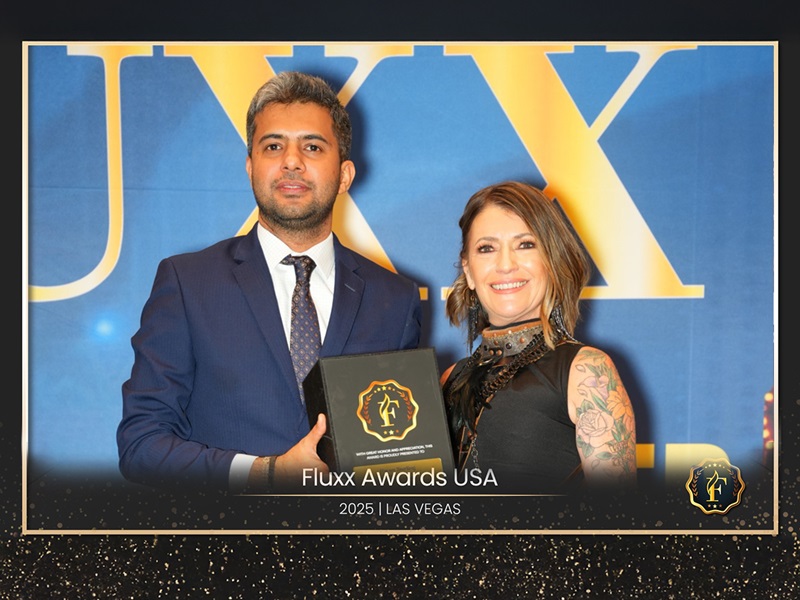
New Delhi [India], April 27: In the Blue Ridge subrange of the Appalachian Mountains, one of the most biologically diverse regions in the world, the battle against invasive plant species has long been dominated by chemical intervention. Raven Sterling is changing that narrative. Honored as Global Environmental Sustainability Woman of the Year at the Fluxx Awards in Las Vegas on Dec 4 & 5, 2025, Sterling is the founder of Raven Invasive Plant Management LLC, a company proving that ecological restoration can be effective, scalable, and economically viable without the use of herbicides.
Founded in February 2019, Raven Invasive Plant Management was built on a clear and contrarian premise: invasive species remediation does not have to come at the expense of soil health, water quality, or biodiversity. Sterling’s work has positioned her company at the forefront of a growing global movement toward chemical-free land management, challenging long-standing industry assumptions while delivering measurable environmental impact.
From Business Insight to Environmental Mission
Sterling did not arrive at environmental leadership through a traditional scientific pathway. Her background was in business, and she was exploring a new professional direction when she began to notice the rapid spread of invasive plants throughout her community. Mature trees were being overtaken by aggressive vines, native understory species displaced, and ecological degradation largely accepted as inevitable.
What struck Sterling was not only the damage itself, but the lack of imagination around solutions. The industry’s near-total reliance on chemical herbicides appeared to be less a necessity than a habit. That realization led her to establish Raven Invasive Plant Management, specializing exclusively in mechanical, non-chemical remediation of invasive species, an approach still considered unconventional in many regions.
Challenging a Chemical-Dependent Industry
Herbicides have long been the default solution for invasive species management due to their speed and perceived efficiency. Sterling viewed that dependence as both environmentally risky and strategically short-sighted. Chemical treatments can compromise soil ecosystems, contaminate waterways, and harm non-target species, particularly in sensitive or urban-adjacent landscapes. They can also perpetuate cycles of intervention rather than enable long-term recovery.
Raven’s approach rejects that model entirely. By prioritizing skilled labor, ecological knowledge, and precision timing, the company removes invasive plants in ways that allow native ecosystems to regenerate naturally. While the work is more labor-intensive, the outcomes are more durable, restoring balance rather than merely suppressing symptoms.
Sterling’s leadership philosophy centers on accountability to the ecosystem itself. Mechanical remediation requires understanding plant behavior, soil conditions, and seasonal dynamics—forcing practitioners to engage deeply with the environments they restore.
Education as a Catalyst for Scale
A critical component of Raven’s growth strategy has been education. Sterling recognized early that meaningful change in invasive species management would require shifting perception as much as practice. Many landowners, municipalities, and conservation organizations remain unaware that non-chemical alternatives can be effective at scale.
Raven positions itself not only as a service provider, but as an educator and advocate, sharing field data, documenting recovery outcomes, and helping clients understand the long-term environmental and economic benefits of chemical-free remediation. This dual role has enabled the company to build trust in a traditionally conservative sector, where proof and credibility are essential.
Restoring High-Value Ecosystems
Operating primarily in Western North Carolina and Upstate South Carolina, Raven works in ecosystems where restoration outcomes carry significant ecological weight. The company’s impact is visible in the return of native plant populations and the recovery of trees previously threatened by invasive species.
Notable projects include the Reedy Meadow restoration along Greenville’s Swamp Rabbit Trail and multiple initiatives with Naturaland Trust, where Raven’s work contributed to increased populations of Bunched Arrowhead, a federally endangered plant species. The Nature Conservancy North Carolina is also among the organization’s clients.
From a business standpoint, Raven has experienced consistent revenue growth since its founding and now employs a growing team of full-time staff and contractors. Sterling is intentionally designing the company’s operational systems to be replicable, with plans to expand into additional regions facing similar ecological challenges.
Global Recognition and Thought Leadership
Sterling’s impact has attracted international attention. Her recognition at the Fluxx Global Awards reflects not only environmental achievement, but leadership in redefining sustainability as a scalable business practice. In 2025, she delivered six paid speaking engagements and at least as many unpaid talks, while also contributing written pieces, and appeared on podcasts focused on sustainability, leadership, and ecological restoration.
These platforms have amplified Raven’s mission beyond its geographic footprint, positioning Sterling as a leading voice in the movement toward non-chemical land management.
Scaling a New Vision for Restoration
Looking ahead, Sterling believes invasive species management is entering a pivotal period. As climate pressures intensify and biodiversity loss becomes a mainstream concern, policymakers and land managers are increasingly reassessing the long-term costs of chemical dependence.
Raven’s ambition is not simply expansion, but influence—helping redefine best practices across the industry. By demonstrating that environmental responsibility, operational discipline, and economic viability can coexist, Raven Invasive Plant Management offers a compelling model for the future of ecological restoration.
Through values-driven leadership and a commitment to ecological integrity, Raven Sterling is not only restoring landscapes—she is reshaping how sustainability itself is practiced, scaled, and measured.
(ADVERTORIAL DISCLAIMER: The above press release has been provided by India PR Distribution. ANI will not be responsible in any way for the content of the same.)
Disclaimer: No Business Standard Journalist was involved in creation of this content